-large.jpg)
Article
Stop Treating Employees Like School Children
Why most of corporate training fails, and how andragogy turns learning into real workplace performance
Q
By Quantara Team
3 min read
38 views
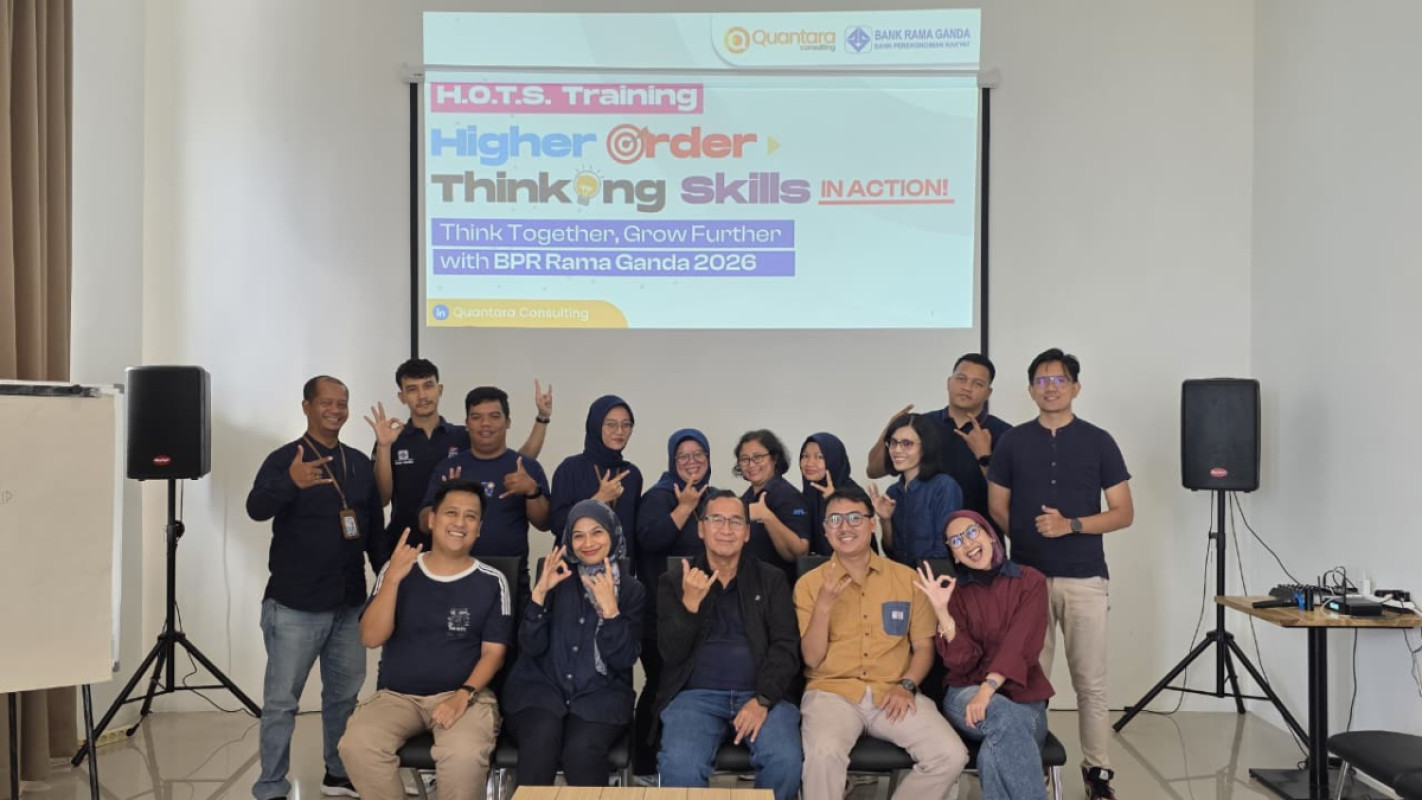
Most workplace learning still looks like a classroom: a trainer at the front, slides on the screen, employees expected to sit, listen, and absorb. But in many organizations, this “traditional classroom model” produces the same frustrating outcomes, low engagement and poor retention, because it doesn’t match how adults actually learn at work. The hidden problem: training is built for kids, not professionals When employees are treated like passive students, training becomes something that happens to them rather than with them. That mindset is rooted in pedagogy, a child-leading approach where the instructor directs the content, pace, and process. In a corporate setting, this often shows up as long presentations, generic modules, and one-size-fits-all curricula.
The result is predictable: people disengage, forget what they heard, and struggle to apply it once they’re back in the real world. To create learning that sticks, organizations need to shift to andragogy, a method designed for adult learners and the realities of work.
Andragogy: the art and science of helping adults learn

The concept of andragogy was popularized in 1968 by Malcolm Knowles, who described it as the “art and science of helping adults learn.” Even the word points to a different philosophy: it comes from Greek roots meaning “adult” and “to lead/guide.” In practice, that means learning is less about delivering content and more about guiding people to build capability they can use immediately. Knowles’ framework explains why adults respond differently to training—and how to design learning that works.
- Self-concept (autonomy matters) : Adults move from dependency toward being self-directed. They want choice, agency, and ownership of their learning path—not rigid instruction.
- Adult experience (use what they already know) : Adults bring accumulated experience and want learning methods—like discussion—that help them interpret and integrate new ideas with what they’ve lived and seen on the job.
- Readiness to learn (relevance drives attention) : Adults become ready to learn when they see a direct need connected to real demands in their roles and life situations. If the “why” isn’t clear, motivation drops.
- Orientation to learning (problem-centered, not subject-centered) : Adults value learning most when it helps solve real problems now. They shift away from studying topics “because it’s in the curriculum” and toward practical application.
- Motivation to learn (internal beats external) : While certificates and compliance matter sometimes, adults are primarily driven by internal motives: self-esteem, better performance, personal growth, and living more meaningfully.
What this means for L&D: shift from “teaching” to “facilitating”
If you want long-term, sustainable learning impact, the job isn’t to deliver information, it’s to create an environment that respects employees’ autonomy and experience. That’s the shift from teaching to facilitating: designing learning that is relevant, discussion-rich, problem-centered, and immediately usable in the workplace. When organizations embrace andragogy, training stops feeling like school, and starts functioning like what it should be: a practical engine for growth, performance, and capability
Tags
#HumanResources
#Training
#Andragogy
Related Insights
You might also be interested in these insights
-large.jpg)
Portfolio
The Starting Line: Higher-Order Thinking Skills Training for PT. NKU
Get to know our journey on NKU Intensive Training
Read More →-large.jpg)
Portfolio
Marketing Skill in Customer Acquisition - Perbarindo Bogor
Share our experience on Learning Together with Perbarindo Bogor
Read More →
Portfolio
BPR Rama Ganda Training
Read more about our training session with BPR Rama Ganda, Bogor, Jawa Barat
Read More →Latest Insights

Need Expert Guidance?
Our consulting team can help you implement the insights from this article in your business.
Get in Touch